Computational Nanomechanics
Nanomechanics is literally “the mechanics of/in nanoscale materials”. The mechanics of nanomaterials may differ from that of their bulk counterparts the confinement of electrons originated from their extremely small sizes. For example, the elastic constants of materials in a undeformed configuration are not “constant” any more at nanoscale, but rather they changes by the size and shape of the materials. There are many subjects which exhibit unique or exceptional mechanical behaviors of materials in “the nano world”. CAN is exploring this unrevealed world by using tools of computation.
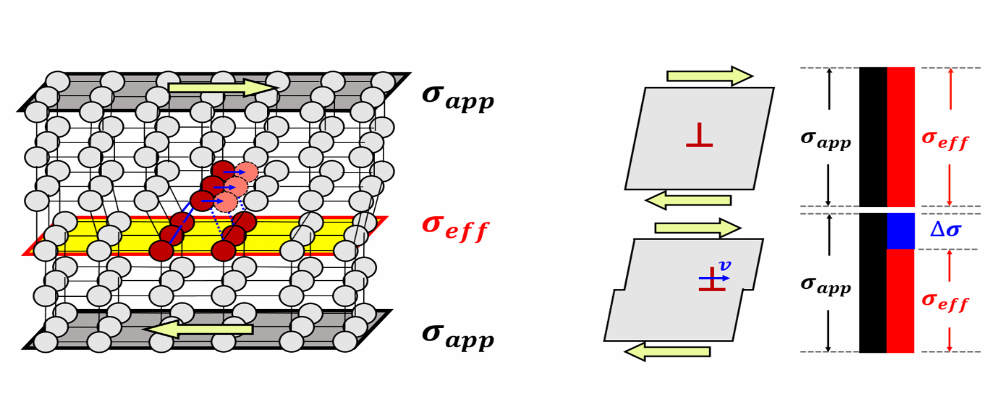
[Stress-drop due to phonon scattering around dislocation core while it is in motion]
Unlike continuum, the motion of dislocation in nanoscale system induces unusual phenomenon. Through atomistic simulations, we observed that the internal effective stress of the system is always smaller than the externally applied stress during the dislocation motion. And we defined this unusual behavior as stress-drop for the first time. By using theoretical analysis, we proved that this behavior is induced by phonon scattering of elastic waves around anharmonic strain field of the core.
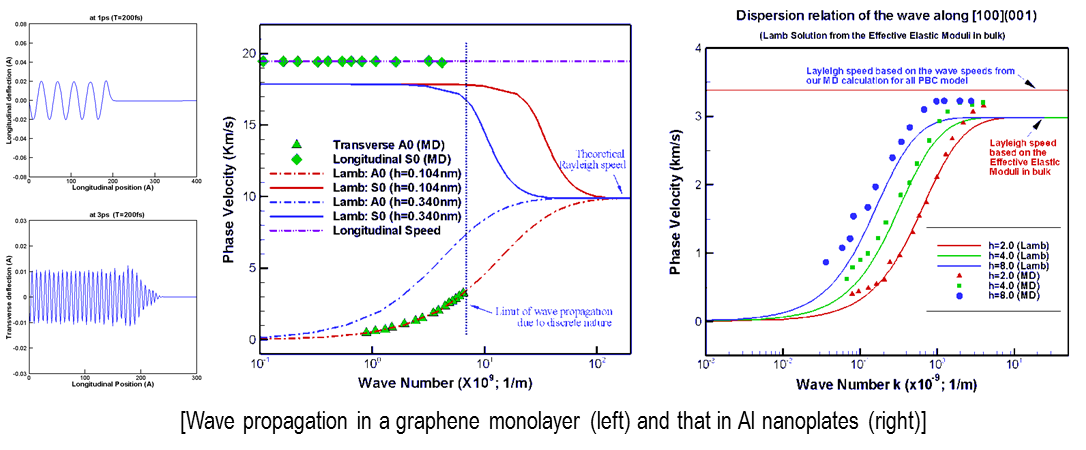
According to continuum plate theory, the elastic stress waves propagate in plates in the form of Lamb waves due to stress-free surfaces. Through MD, we can compare the Lamb waves in nanoscale plate to those in continuum plate. MD is a useful method to evaluate the validity and limitation of solid mechanics theories for nanoscale systems.
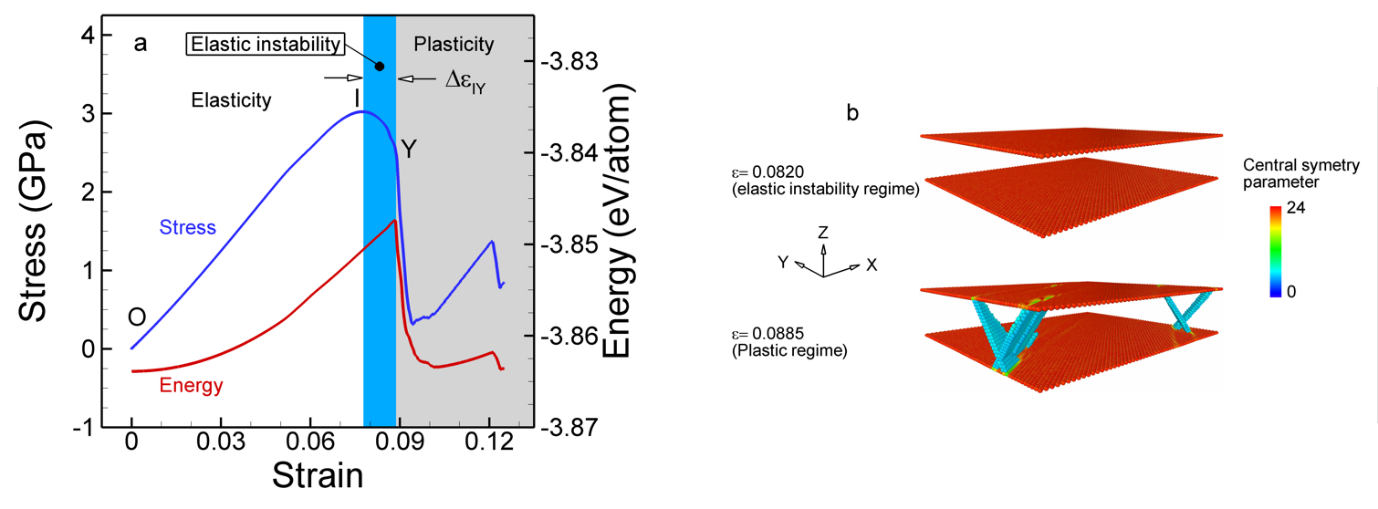
[Mechanical response of Au (001) nanoplate under uniaxial stress condition along [100] direction]
Under mechanical loading, metal nanoplates fail via elastic instability rather than the yield strength. As a result, we observed a unique “smaller is weaker” trend. We provided numerical and theoretical evidence to show that the nanoplates exhibit an intermediate mechanical regime that occurs between elasticity and plasticity, which we call the elastic instability regime.
Computing Methods in Nanoscale
There are many good tools to mine precious germs in the nano worlds. Of course, they are not always good, and they have advantages and disadvantages based on what we want to know. Here we list the representative computational methods, which are currently utilized in the CAN Lab to investigate the nanomechanics. According to resolutions, they can be categorized into quantum – atomic – (meso) – continuum methods. In addition, ADMD is a specially developed method in order to explore the rare event systems, and Scale-Bridging is a hot topic to merge more than two different resolution into a single computational framework.
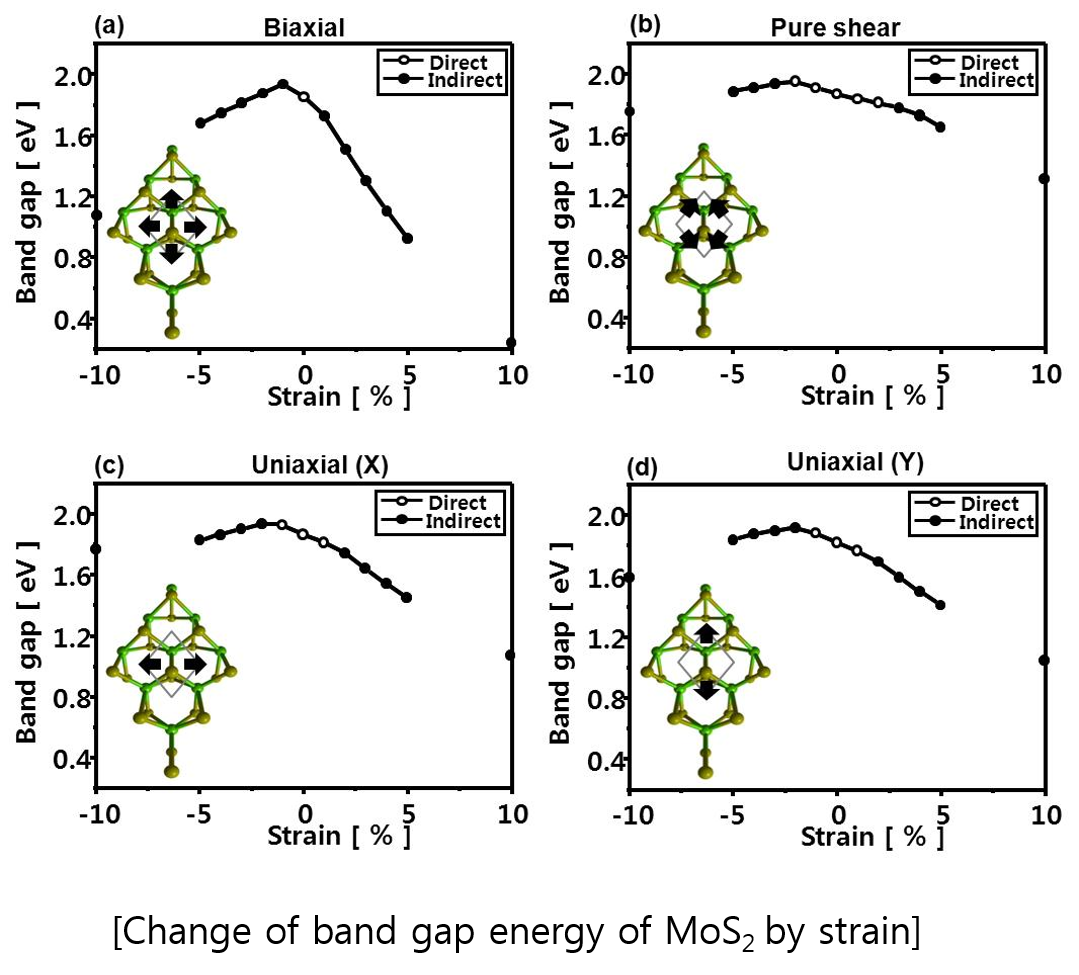
Density Functional Theory (DFT) calculations are one of the most accurate and expensive simulations to investigate nanomaterials. Electronic properties, such as band structure of materials are widely studied by DFT. The band structure and its change due to applied strain of an MoS2 monolayer are conducted as an example.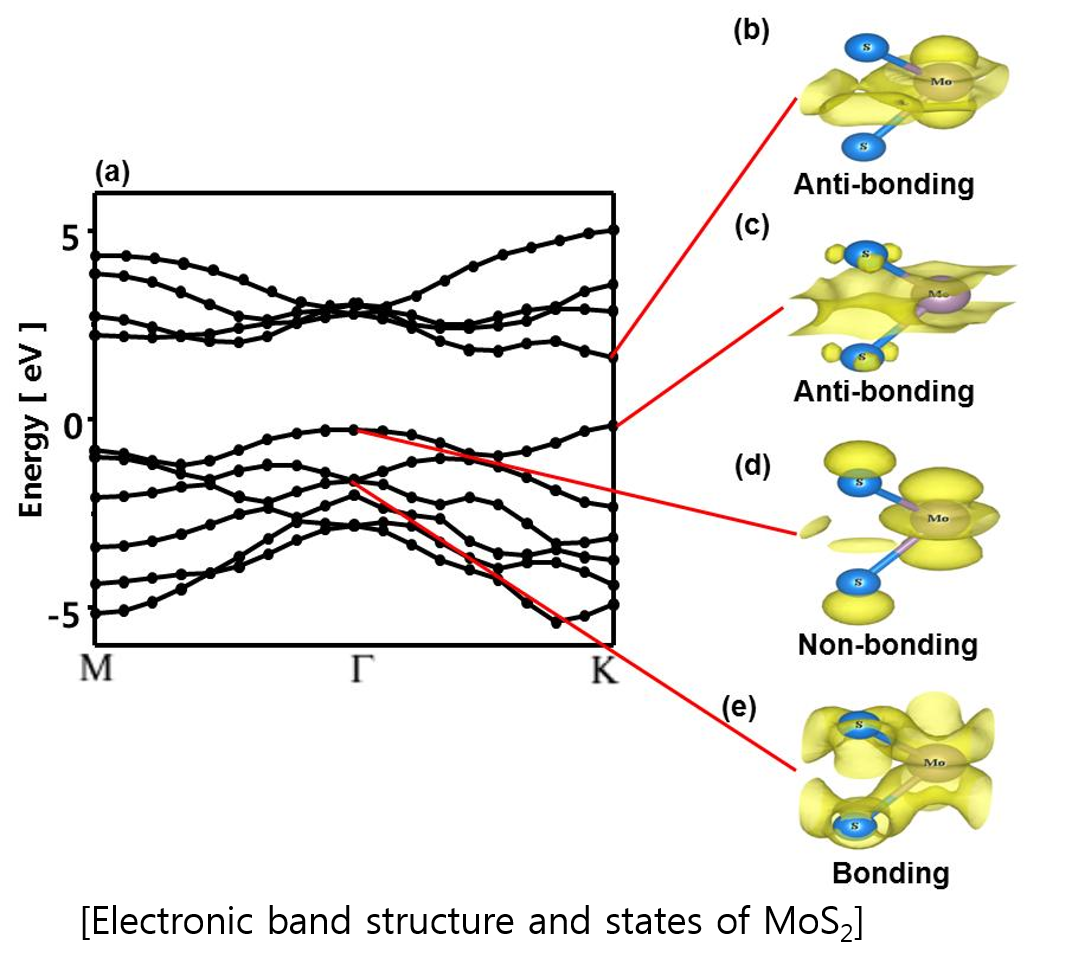
An MoS2 monolayer show direct band gap unlike its counterpart bulk. However its direct band gap easily turns to indirect band gap when small strain applied. Through DFT calculations, we can analyze the electronic structure and wave functions of each states, and thus understand basicmechanism underlying the phenomenon.
Molecular Dynamic (MD) calculations are suitable to describe the discrete nature of nanoscale materials. Classical MD usually solves atomic motions governed by the Newton’s second law, where the interaction between atoms or particles is described by empirical potentials. The accuracy and efficiency of MD calculations are strongly dependent on the empirical potentials employed. As an example of MD simulations, the defect evolution and propagation in metal nano films are examined.
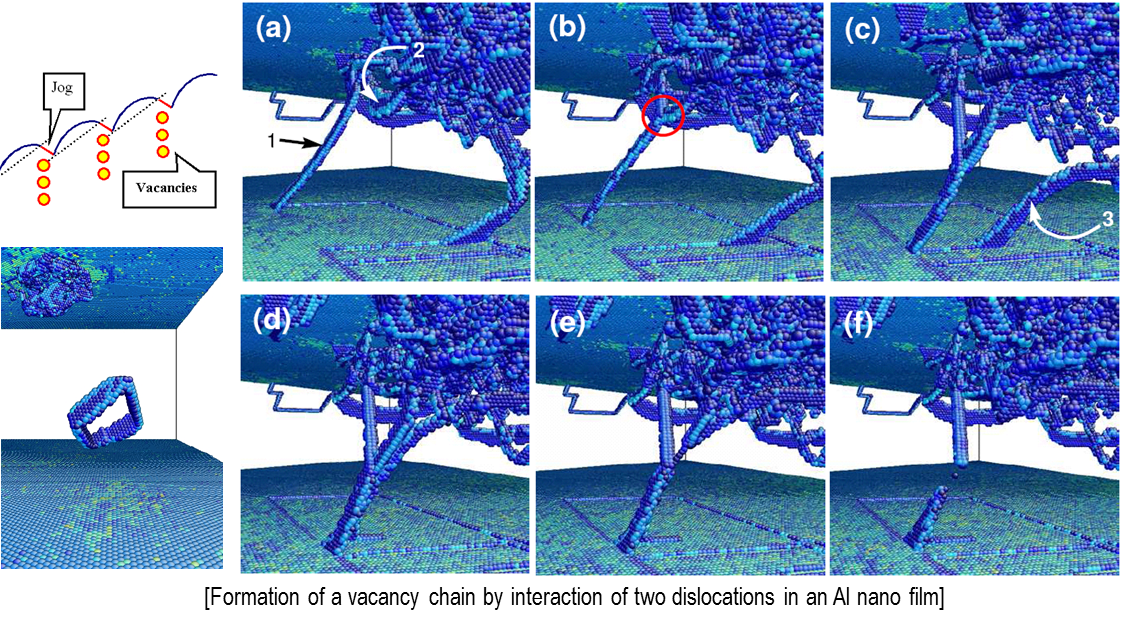
Mainly observed defects in metal film under the external loading are dislocations (line defect). The dislocations in metal are usually lied on a slip plane (111), and are split into stacking fault surrounded by two partial dislocations. Tow dislocation indicated by 1 & 2 in (a) make a jog dislocation in (b). When a jog dislocation moves there leaves a chain of vacancy as a trail. MD is a powerful tools to observe the complicate interaction of moving atoms.
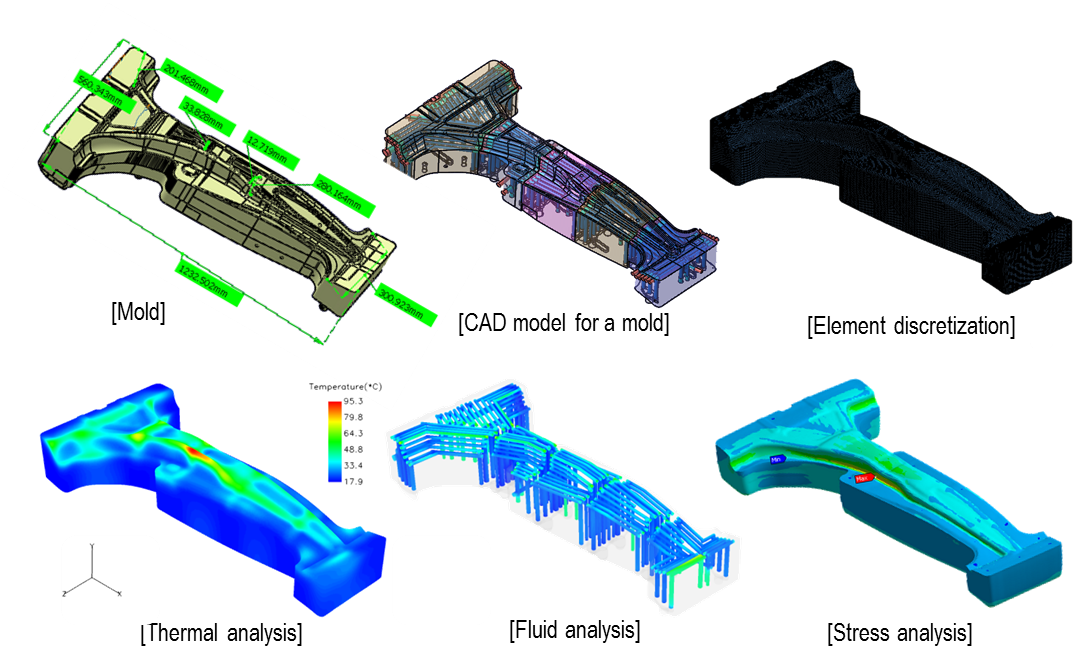
Finite Element Method (FEM) is one of most successful computational schemes in various engineering fields, including structural, vibrational, heat transfer, electro-magnetic, diffusion analyses and even fluid dynamics. Especially, FEM is a powerful tool to obtain the stress-strain-deformation field of solids under loading. The stress and thermal analyses of a center pillar mold for automobile are conducted as an example.
One of interesting topics in computational nanomechanics is rare event system, where a special event occurs very rarely, however, it is very important. Conven-tional MD is too wasteful to track these phenomena. Typical examples of rare event systems are atomic diffusion, structural changes of molecules and protein folding/unfolding. Here, the reaction pathways and activation energy barriers of rare events are key information we need to evaluate.
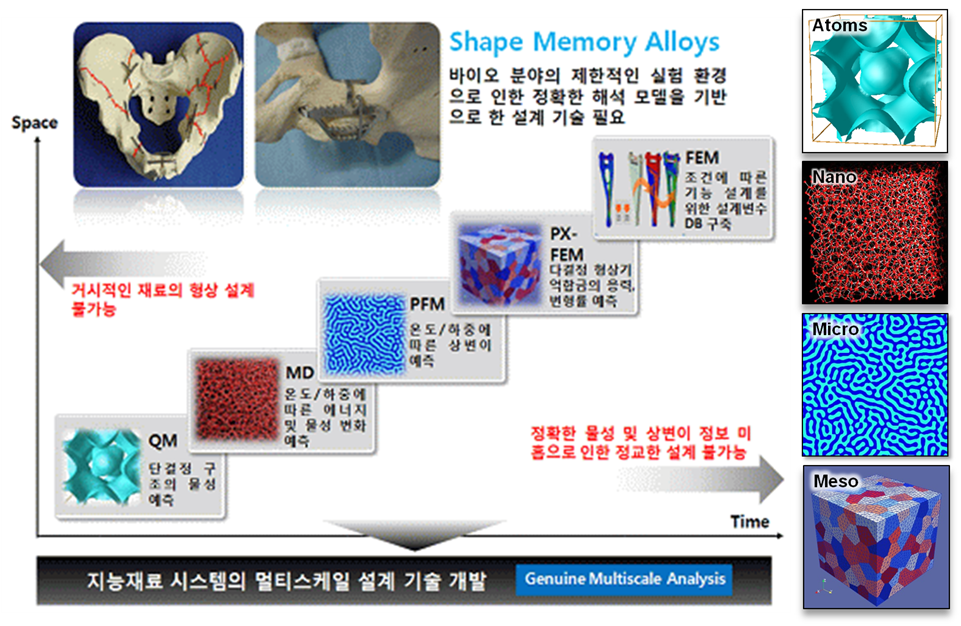
Each method (resolution) has strong and weak points. To maximize the strong points and to overcome limitations, scale bridging methods (multiscale) are widely studied. We are now developing an efficient multiscale method for shape memory alloys and secondary battery materials under the cooperation with other research groups: SNU, SKKU, Yonsei, Sogang, Kyunghee Universities.
Nanomaterials
All materials are able to be nanomaterials as long as their sizes (at least one dimension) become nanoscale. By virtue of the nature herself, many materials reveals exceptional or extraordinary characteristics compared to their bulk counterparts, when their size reaches to nanometer scale. Among them are fullerenes and graphene which gave nobel prizes to Smalley and Geim, respectively. CAN is now mainly working on the mechanics of graphene, metal nanowire, nanoplates, and free surfaces.
Interestingly, the study also found that the free edges of the graphene sheet often had the largest vibrational amplitudes during resonance. To verify this, finite element simulations of the graphene sheet were performed; by introducing non-uniform stresses in the suspended graphene sheet through application of both an in-plane stretch and an in-plane rotation, the authors were able to reproduce the large edge modes of vibration observed experimentally. However, no correlation between the large edge modes of vibration and the Q-factors were established in that work.
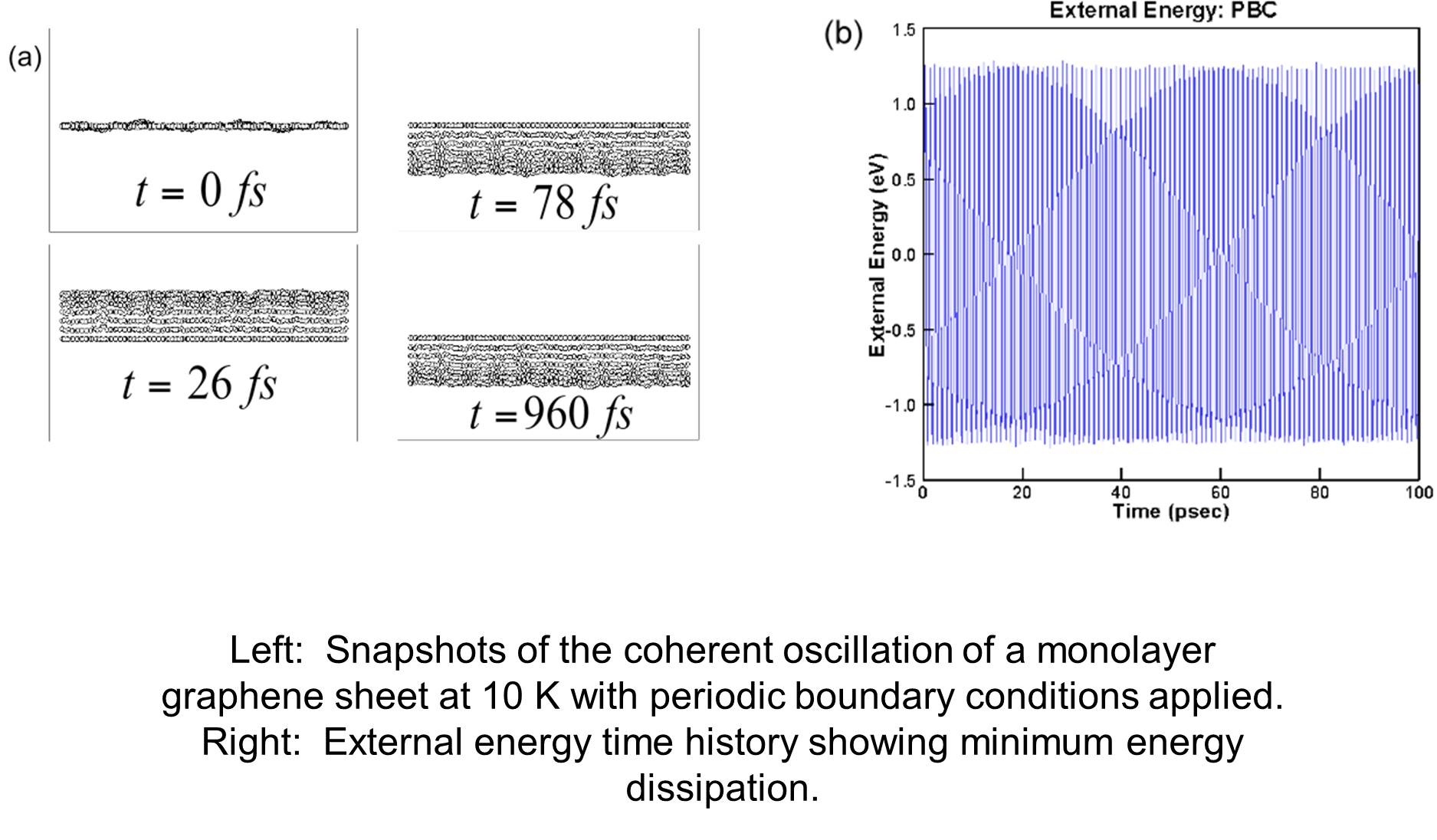
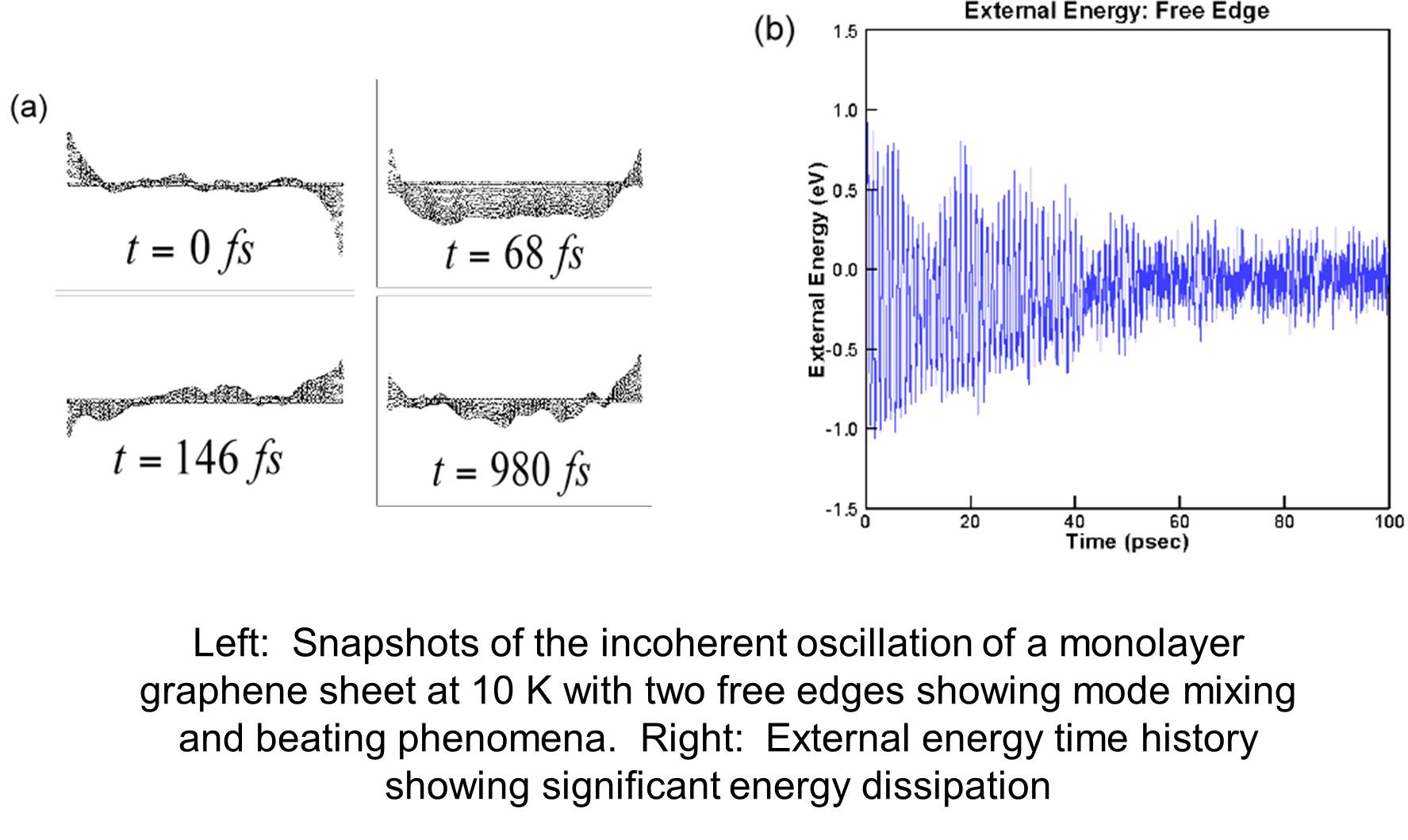
Therefore, we have shown that, as opposed to the experiments of Sanchez et al. that the spurious edge modes occur naturally through the MD simulations without application of any non-uniform stresses.? Instead, they arise due to the fact that the carbon atoms at the edges of the graphene sheet have fewer bonding neighbors, and are therefore undercoordinated with respect to the carbon atoms in the interior of the graphene sheet. The lack of bonding neighbors means that the stiffness, and therefore the vibrational frequency of the edge atoms differs from the atoms within the graphene bulk; this difference in vibrational frequency of the edge atoms is illustrated below in Figure (a).
Because this edge induced energy dissipation occurs at 10 K where thermoelastic losses are minimal, we have demonstrated that edge effects are the key intrinsic loss mechanism that causes energy dissipation, and thus low Q-factors in graphene NEMS.
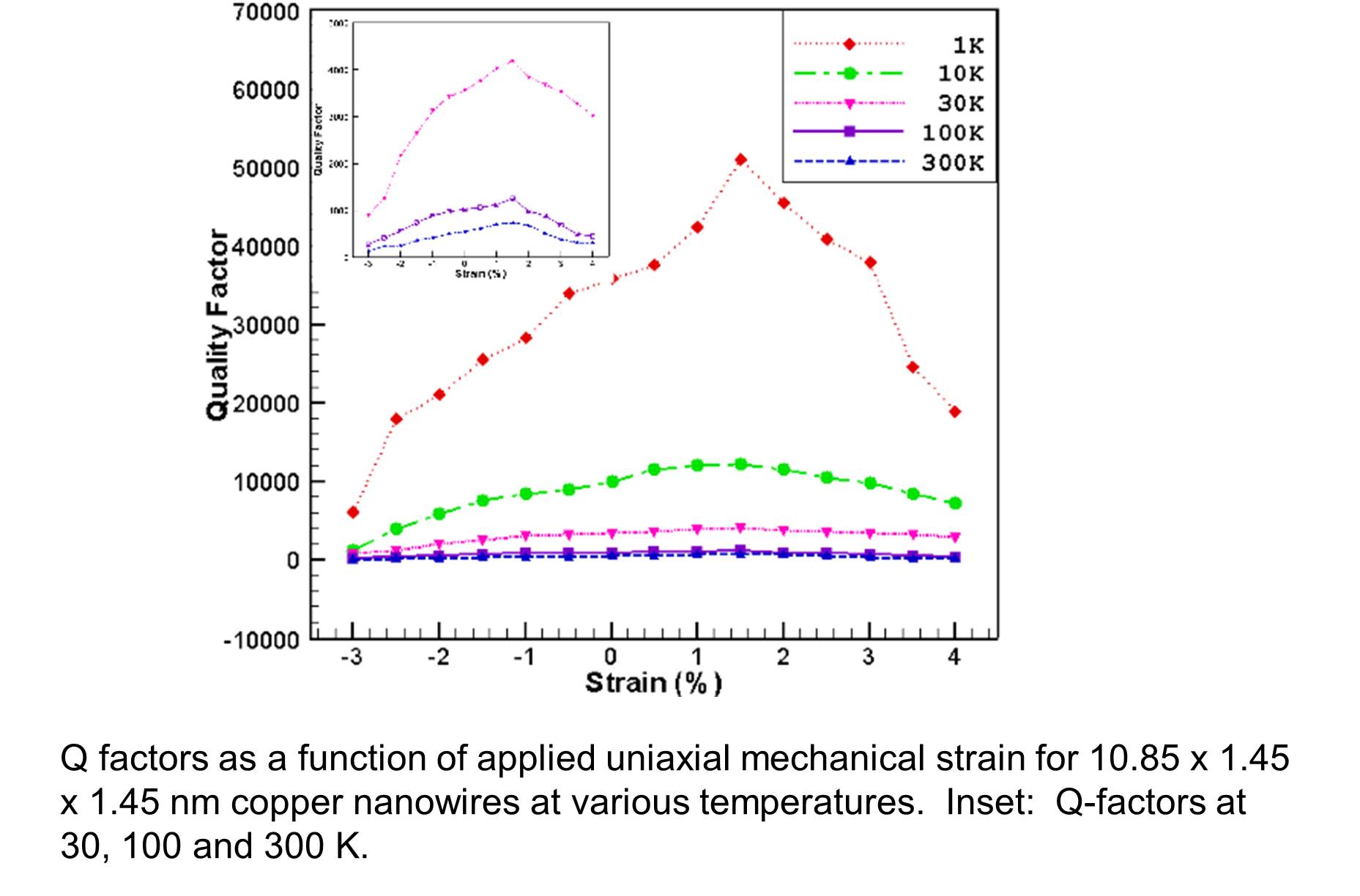
Nanowires, both metallic and semiconducting, will be utilized for various NEMS applications, including mass, force and pressure sensing, next generation wireless applications, etc. One key issue for nanowire-based NEMS is that their Q-factors, due to surface effects degrade considerably with decreasing nanowire size.
We have recently demonstrated using classical molecular dynamics that mechanical strain can be an effective tool to combat the intrinsic surface-induced Q-factor degradation in nanowires. The idea underlying this effect is that surface atoms vibrate at different frequencies than do bulk atoms because of their different elastic stiffness. The application of mechanical strain causes the surface atoms to have a stiffness that becomes similar to the bulk atoms, which thus improves the coherency of oscillation, and thus the Q-factors.
Unusual Poisson’s Ratio in Metal Nanoplate
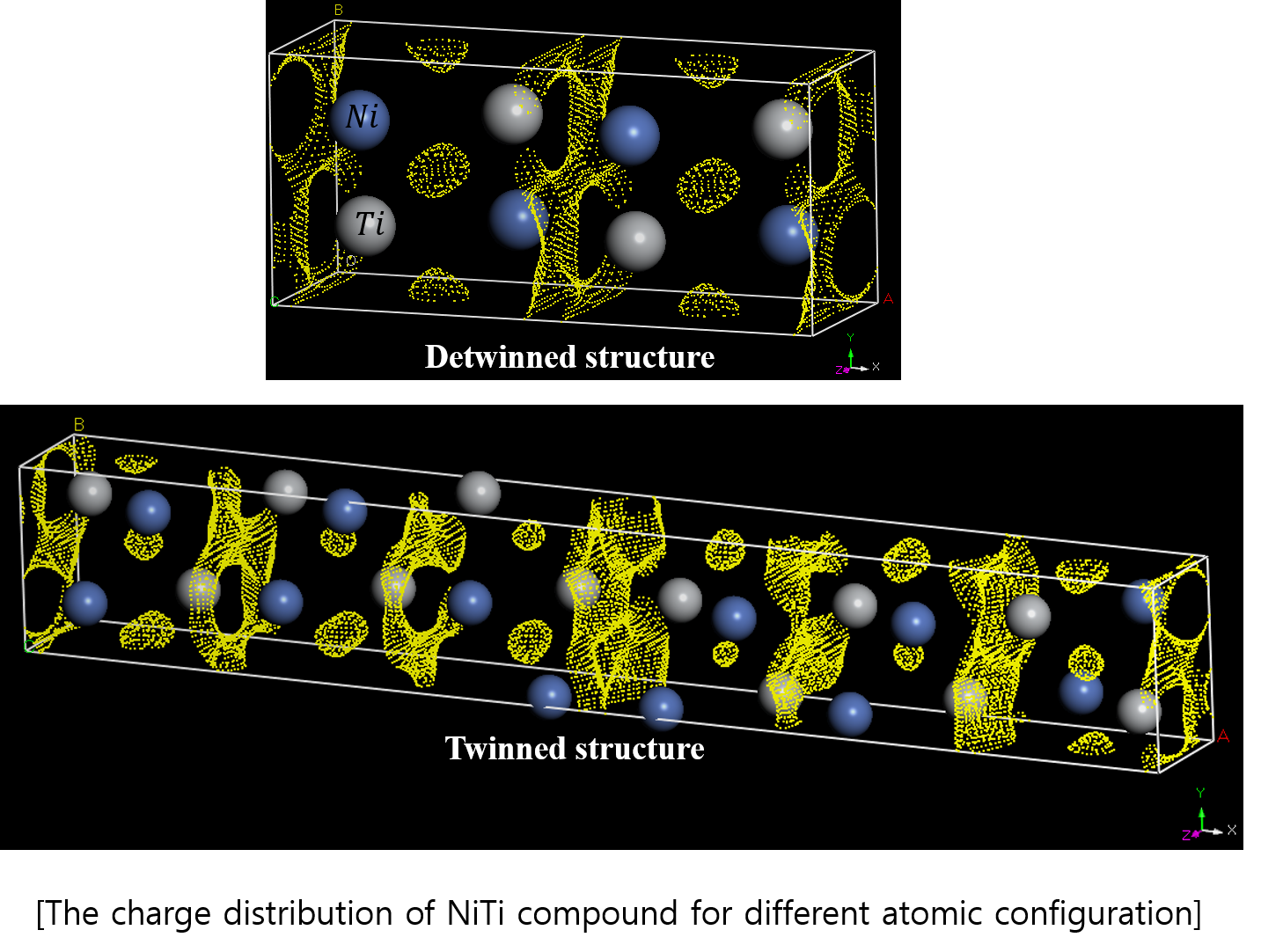
Shape-memory alloys (SMAs) are a rare class of metal compound that after a huge mechanical strain can, on heating, recover their original atomic configuration. In the many useful applications of SMAs, the most studied material is NiTi (nitinol). The understanding on the NiTi properties in nano-scale calculations is still lacking. Here, we present a first-principles density functional theory study of the structural energies, mechanical properties, phase-transformation of NiTi.
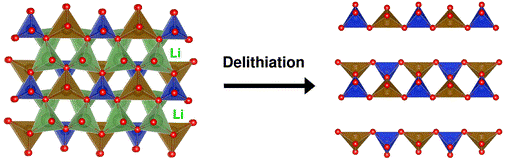
Good cyclability is essential for the potential application of cathode materials. Here, we investigate the structural stability of two-dimensional (2D) Li-layered and three-dimensional (3D) structured polymorphs of Li2FeSiO4 and Li2MnSiO4 using the density functional theory calculation. We find that all 2D Li-layered polymorphs of both materials are unstable upon full-delithiation owing to layer exfolilation, which can lead to an amorphous structure.
Supercomputers & Supercomputing
What are necessary physical weapons in the battlefield of computational nanomechanics Only one thing we need is computer. We call it (literally) CAN! What is the best physical weapon here? That is supercomputer. CAN is one of heavy users of UNIST Supercomputing Center. CAN has a great interest in the supercomputer and supercomputing (how to use supercomputer).
Validity of the Continuum (Solid) Mechanics Theory in nanoscale
CAN has been studying whether famous solid mechanics theories, such as Hill’s instability, Betti’s reciprocity, Lamb wave, etc., can be adopted to nanoscale materials. And, CAN is now trying to figure out how much the behaviors of nanomaterials differ from their corresponding continuous materials based on these theories. CAN will update these recent research results soon.